Seven Palates v. The Clare Lineup
Five wines, seven blind palates, 175 calls on the record. What the room nailed, what fooled everyone, and the Adelaide Hills Riesling that walked out of the building unidentified.
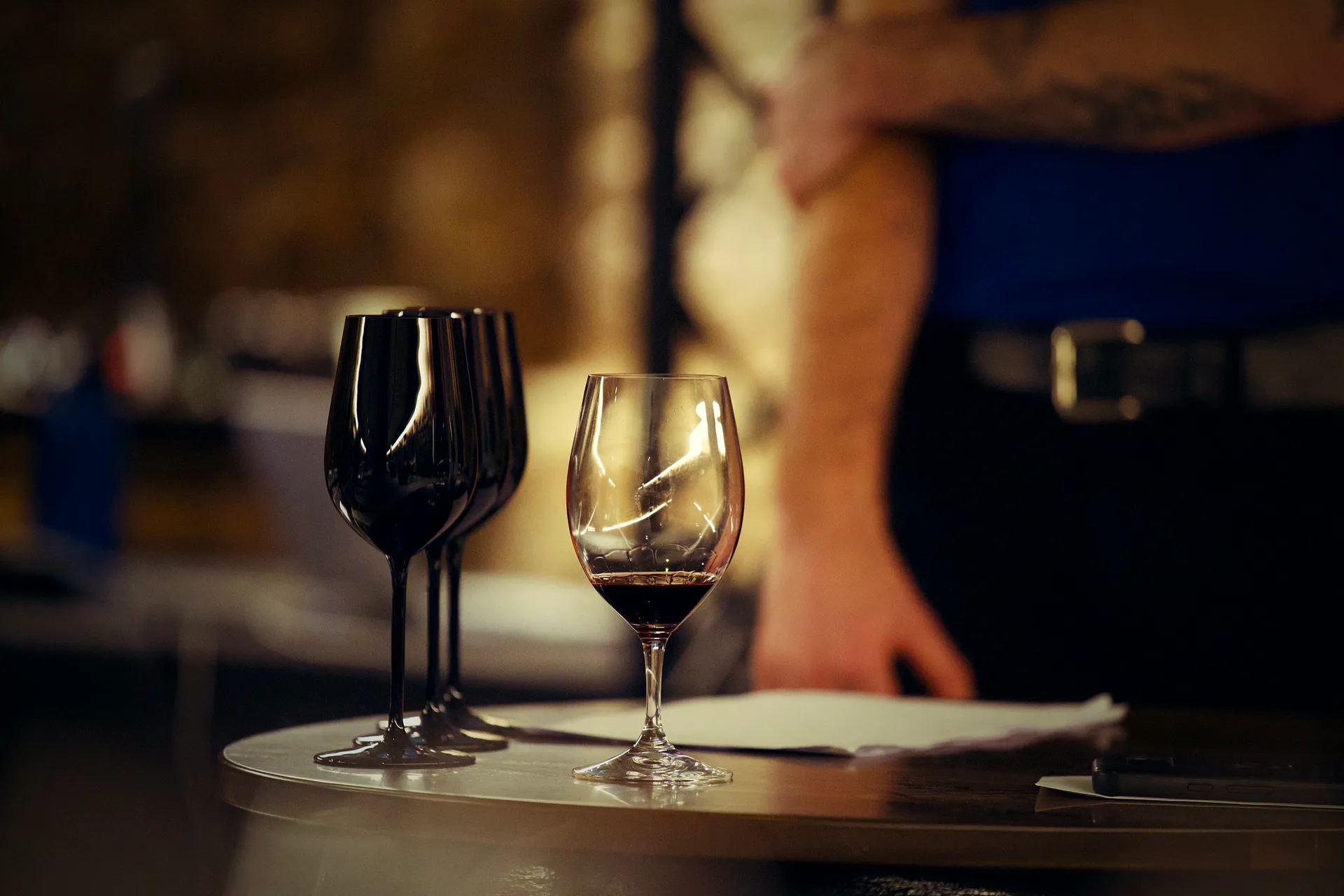
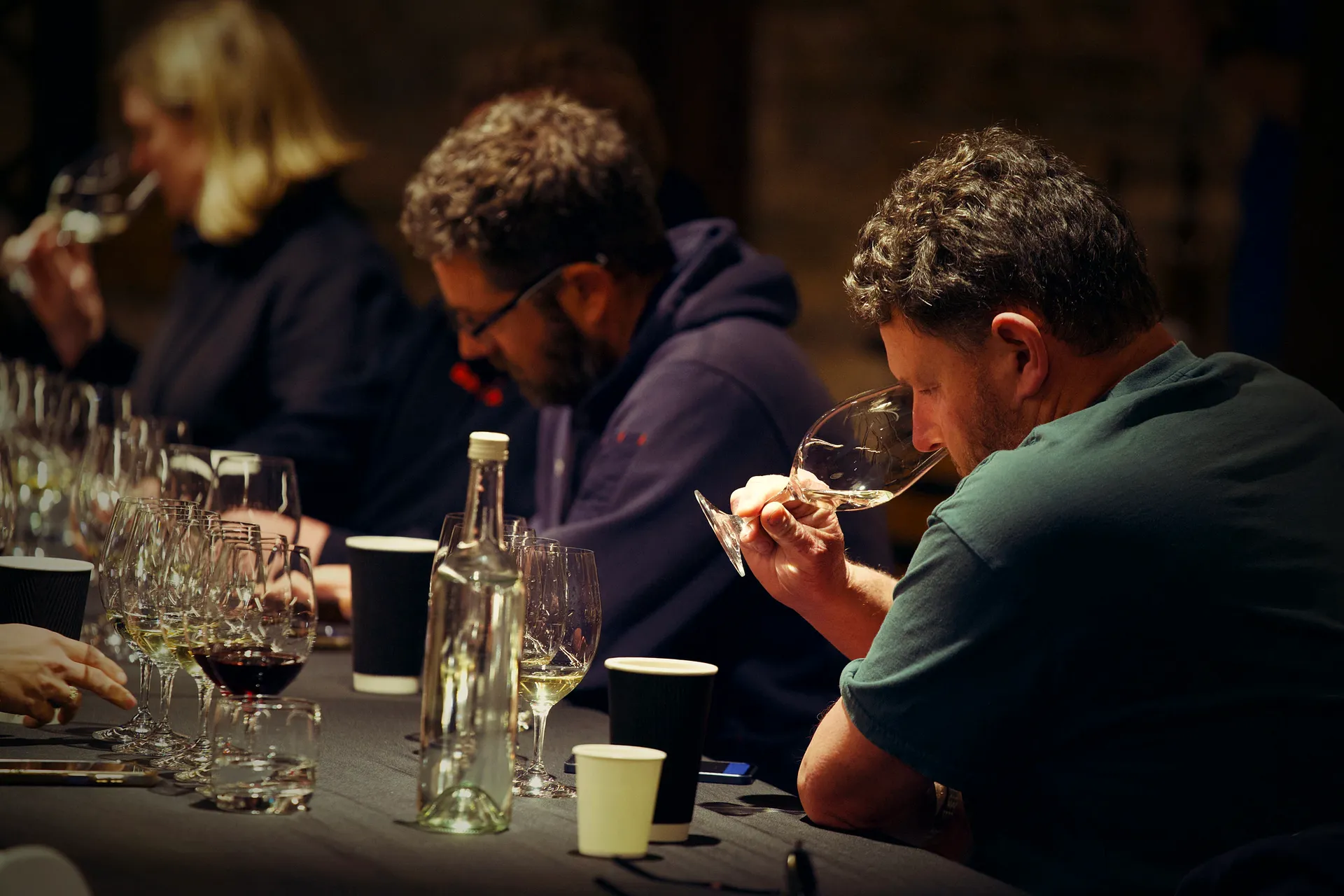
This is a wine review with a scoreboard. At the Clare Cup on 11 July, seven competitors met five wines blind and, for each, worked down five multiple-choice calls in a fixed order: Old World or New, country, region, variety, vintage. Here's the part that shapes everything below — the game marks each call right or wrong before the next one opens. Misread the country and you're not sunk; you drop the point and carry the correction into the region. A hundred and seventy-five calls in all, every one on the record. The room went 96 from 175. Here's the lineup, wine by wine, with what the crowd actually called — because how a wine gets misread, and where the room claws it back, tells you more than any tasting note. The full pour sheet, duel wines included, runs alongside this piece.
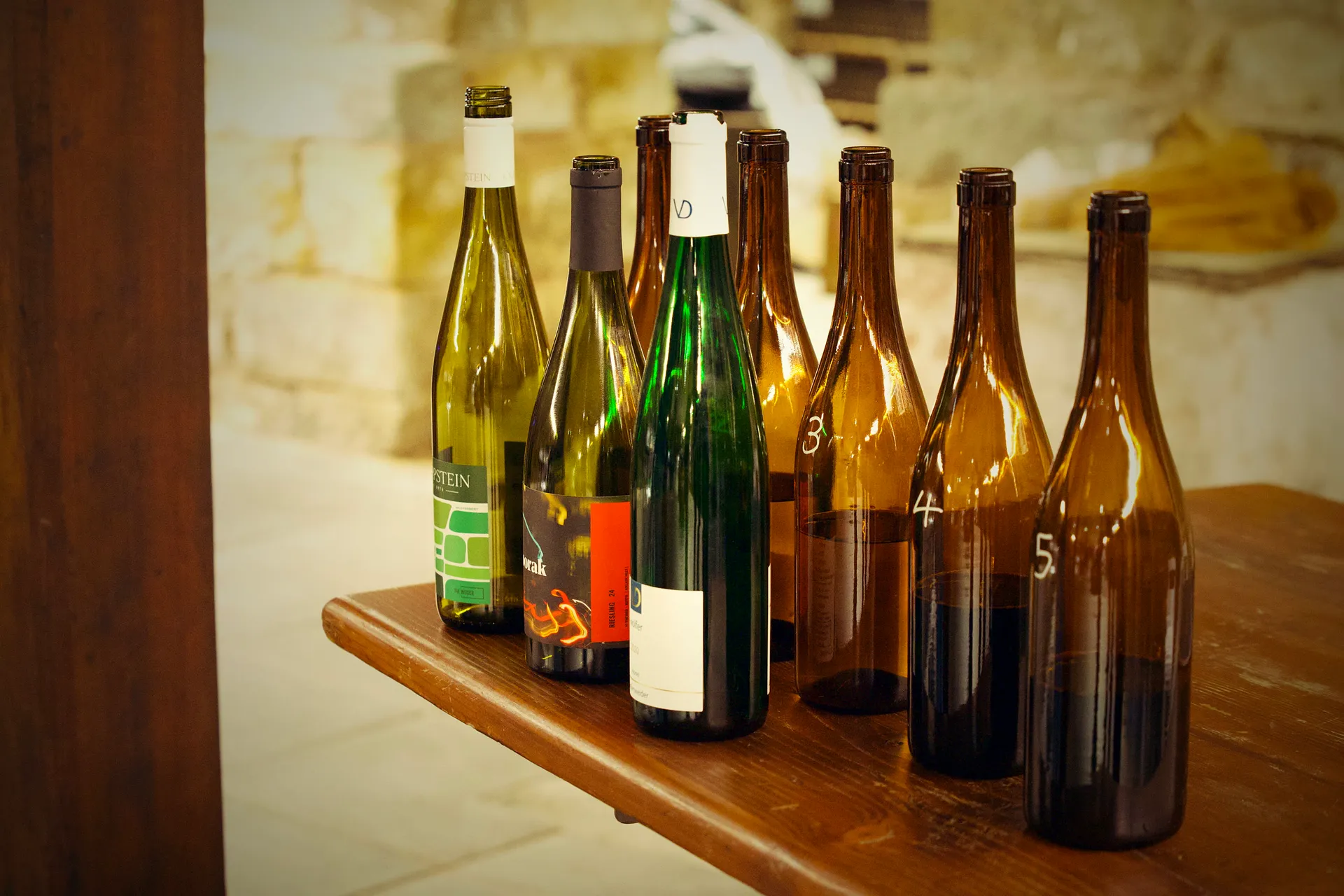
Wine 1 — The Home Game
- The Reveal
- Knappstein The Insider Riesling
- Region
- Clare Valley, Australia
- Vintage
- 2025
Knappstein's The Insider Riesling 2025 — the house wine, poured blind inside the winery that made it — and the room treated it like a signed confession: 33 of the day's 35 calls on this wine were correct. Every single palate placed it in Clare — the only unanimous correct region call of the day — and every single palate nailed the vintage. This is what a region with a signature smells like: the floral lift, the line of acid, all of it apparently legible to seven people who had no idea what was in the glass. If you want a case for Clare Riesling as Australia's most recognisable wine, here are fourteen data points.
Wine 2 — The Assassin
- The Reveal
- Moorak Riesling
- Region
- Kuitpo, Adelaide Hills, Australia
- Vintage
- 2024
The second wine was also a Riesling, from one region over — Moorak's 2024, grown at Kuitpo in the Adelaide Hills. All seven opened by calling it Old World, and all seven were wrong. Three clawed the region back regardless — Adelaide Hills, found at the region call once Europe was off the table. But the grape never came: six said Fiano, one said Pinot Gris, and not one said Riesling. That's the part worth sitting with. Variety is the last of the five calls, so the three who'd just pinned Adelaide Hills were looking at a wine they now knew was Australian and cool-climate — and still didn't land on Riesling.
Read the misses and a picture forms. Fiano is a texture call — the room tasted breadth and phenolic grip where it expected Riesling's austerity, and reached for the Italian white that matches that feel. Twenty minutes after seven palates named Riesling on sight, the same grape grown one region over slipped past every one of them. That's not the room being bad at wine. That's the honest size of the gap between Clare Riesling and Hills Riesling — measured, for once, instead of asserted.
Wine 3 — The River Nobody Could Map
- The Reveal
- Vollenweider Wolfer Riesling
- Region
- Mosel, Germany
- Vintage
- 2020
The third Riesling of the day was Vollenweider's Wolfer, off the Mosel's slate. This time the room owned the grape — all seven called Riesling, the day's only unanimous correct variety. Geography was another matter. Five of seven called France for the country and were told they were wrong; three of them reached for the Mosel anyway at the region call — the right river, one step after the wrong country. The two who did name Germany then picked the wrong German region, the Pfalz and the Rheingau. Nobody strung the right country and the right region together on the same wine.
Five years of bottle age fooled almost nobody, either: five of seven called the 2020 vintage dead on. So the room could read the grape, the age, and in three cases the actual valley — it just kept crossing into France to get there. Somewhere, a Mosel grower is framing this.
Wine 4 — Nobody's Country, Everybody's Region
- The Reveal
- Hans Herzog Spirit of Marlborough
- Region
- Marlborough, New Zealand
- Vintage
- 2017
Here's where the format earns its keep. Asked for the country, all seven palates said Australia — New Zealand drew zero votes. But a wrong country isn't the end of the line: the game flags it and moves you on, and by the region call every one of them knew Australia was out. So all seven swung to a New Zealand region — Gimblett Gravels, Hawke's Bay, Marlborough. Not one named the country; all seven found the neighbourhood, one call later, with the correction in hand. That isn't the room secretly knowing and refusing to say — it's the sequence doing exactly what it's built to do, turning a bad guess into a better one.
The wine earned the Australia guess: Hans Herzog's Spirit of Marlborough 2017, a nine-year-old Bordeaux-style blend from a region the textbooks file under Sauvignon Blanc — savoury enough to read as an Australian red. Four of seven matched the answer key's Cabernet blend through the bottle age, and four called the 2017 vintage. Marlborough Cabernet is a rare bird, and on this evidence a convincing one: structured enough that more than half the room saw Cabernet in the dark.
A correction, printed where everyone can see it. The pour sheet lists this wine as Merlot-led with the Cabernets in support — but the night's answer key had it as a Cabernet blend, and scored accordingly. Which means Claire H. and M. Corbett, both marked wrong for putting Merlot in the blend, may have made the sharpest variety read of the afternoon. The league's blend questions have since moved to dominant-variety framing, partly because of wines exactly like this one. When we say every call goes on the record, we mean the scorer's too.
Wine 5 — The Impostor
- The Reveal
- Toutiac Roupit Petit Verdot
- Region
- Bordeaux, France
- Vintage
- 2019
A straight Petit Verdot from Bordeaux — Toutiac's Roupit 2019, the blending grape gone solo — and it committed identity theft in front of witnesses. Six of seven palates called it Cabernet Sauvignon; Petit Verdot drew zero votes. Which is, in fairness, precisely the point of Petit Verdot: all that colour, tannin and violet perfume is what Cabernet borrows from it in the blend. The country call was another shambles — Italy outpolled France four votes to two, with Spain taking the last — but, as with the New Zealand wine, the region call bailed the room out: four of seven landed on Bordeaux, most of them after the game had already waved their country away.
And then the room produced its sharpest single call of the day: six of seven nailed the 2019 vintage. On the last wine, palates that had been arguing about hemispheres all afternoon read a specific year in near-unison. Vintage, it turns out, was the room's superpower all along.
The Scoreboard
Add up all 175 calls and the room's profile is nothing like the stereotype of the blind taster who conjures a château from thin air. The crowd's best category was vintage — 26 of 35, with the 2025 called unanimously and the 2019 called six votes to one. Its worst was country, at 13 of 35. And regions (19 of 35) consistently beat the countries that contain them — the room found the Mosel, Bordeaux and a fistful of New Zealand regions while misfiling the nations around them. Part of that is the format: region comes straight after country, with the country already marked right or wrong, so a wrong flag becomes a running start on the neighbourhood. Part of it is simpler — a place leaves a sharper fingerprint than a border.
That's the finding, and it's a genuinely useful one: perception runs on specifics — a river's slate, a valley's acid line — not on abstractions like nationhood. The abstractions are where the guessing starts.
Five wines, 175 calls, a 55% room. Every one of these calls was locked the moment it was made — no take-backs, no editing the record. We'll do it all again in the Adelaide Hills on 22 August — the grape is Chardonnay, and after Wine 2, nobody should assume that helps.